T-Sukuk
T-Sukuk: Local Currency Islamic Sukuk Issuance
T-Sukuk are Islamic Sharia-compliant financial instruments issued by the federal government of the UAE denominated in the Emirati Dirham (AED). The Islamic T-Sukuk programme is part of the UAE’s efforts to strengthen its local financial markets by contributing to building the UAE dirham denominated yield curve, offering investors secure and low-risk investment options that align with Islamic finance.
Legal Disclaimer: Not for distribution, directly or indirectly, in or into the United States

Objectives
The primary objectives of local currency Islamic Sukuk issuance are:
Supporting the establishment of a sukuk capital market in local currency and to tap the growing global sukuk market
Raising funds for the federal government from a broad base of local and global investors
Offering liquidity to finance strategic development programs and projects
Cementing the UAE’s position as a global investment hub and lucrative investment destination in the Islamic economy
T-Sukuk Investment Process
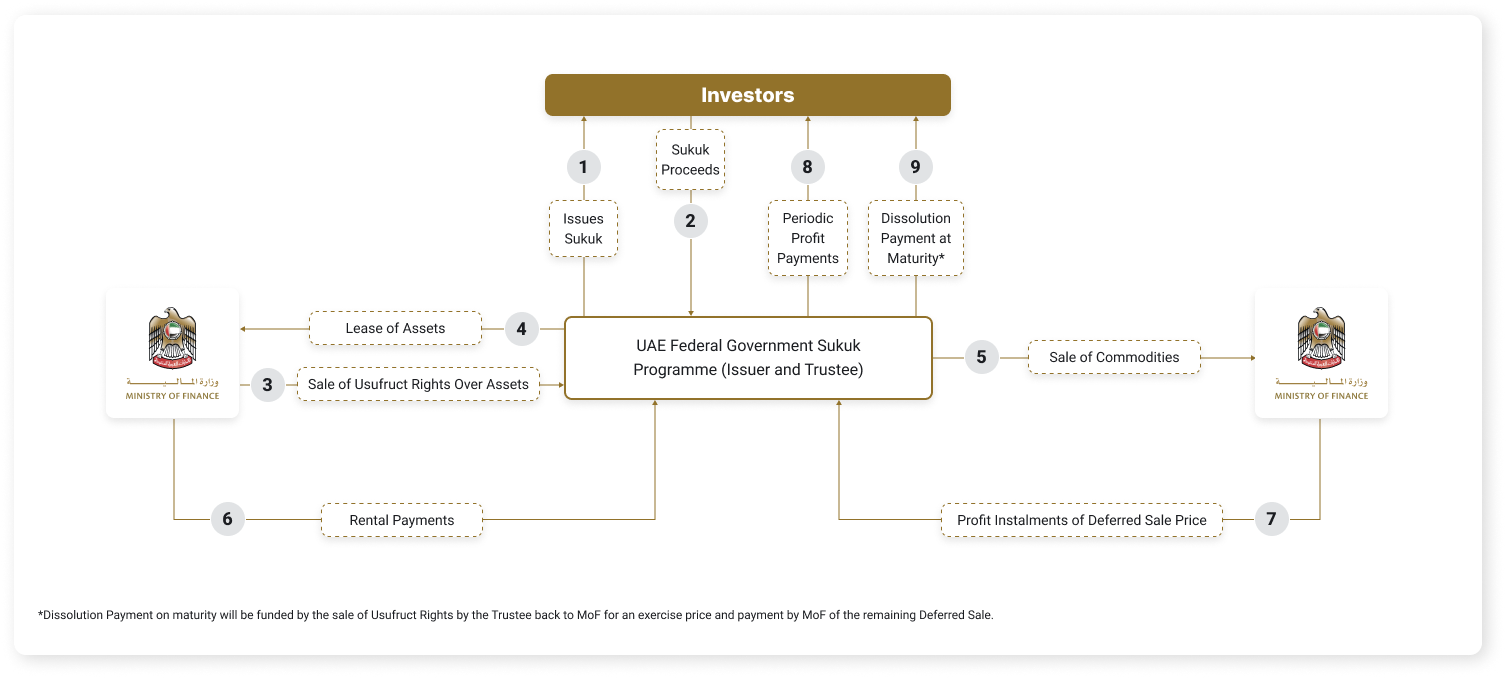
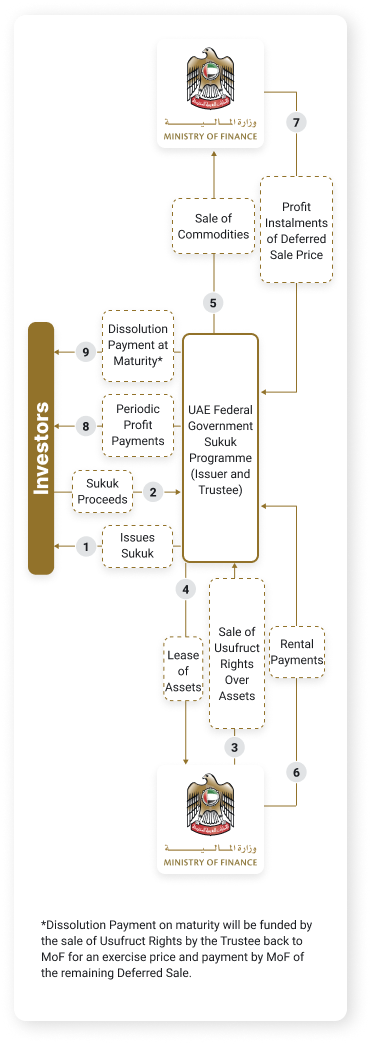
Islamic T-Sukuk are asset-backed, Sharia-compliant financial instruments whose profit and payment at maturity mainly rely on the performance of the issuer’s assets. Purchasing T-Sukuk means lending the federal government (Sukuk issuer) a set amount for a specific time period. In return, the investor (Sukuk holder) receives periodic profit payments from the government. The Sukuk issuer fulfils its obligation once the Sukuk reaches its ‘maturity date’ or the date on which the Sukuk’s principal amount, known as the ‘face value’ or ‘par value’, must be paid in full. The process involves the following steps:
T-Sukuk Structure and Cash Flows
The diagram below illustrates the key structural elements and cash flows of the Sukuk offering.